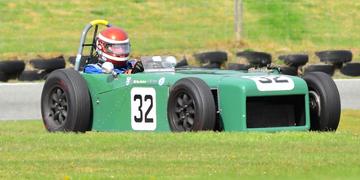




Mallock is a well-known type of race car in motor racing, and at the Classic SpeedFest at Teretonga Park in Invercargill, several were recently entered. However, one was driven by the son of the man who designed and built them.
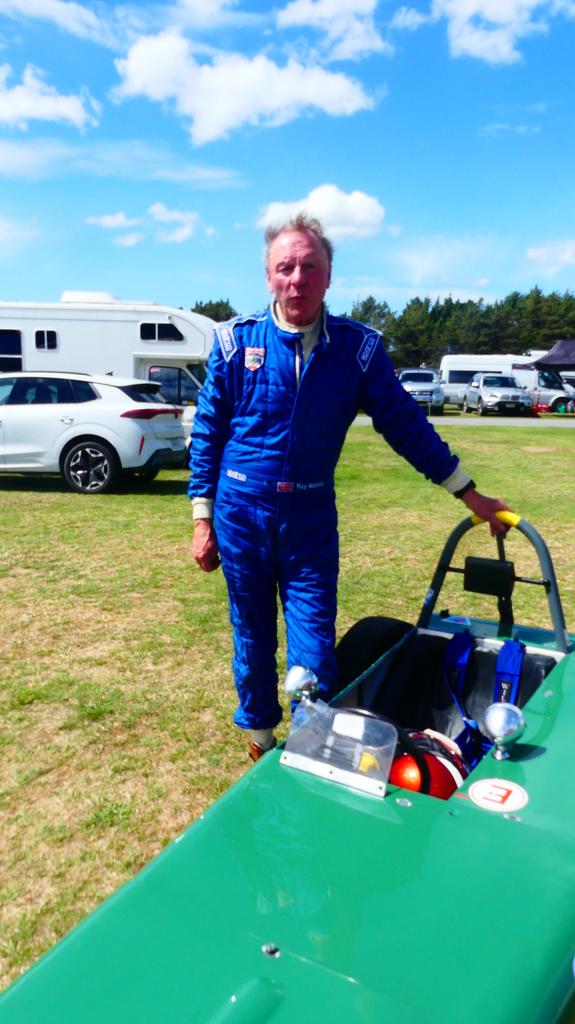
Ray Mallock is a well-regarded driver and engineer, and his father, Major Arthur Mallock, designed the Mallock cars. Ray was part of the Formula Junior Platinum Jubilee World Tour to celebrate the 70th anniversary of Formula Junior. As he visited Teretonga Park for SpeedFest, he declared the circuit, the seventy-fifth one he has raced at, as “magical”.
“It is in the family blood,” says Ray of motorsport.
“I vividly remember the moment when I knew motorsport was for me. It was at Brands Hatch when I was ten years old, and dad, in his self-built Mallock, had suffered a misfire, was at the back of the grid, and came steaming through to win in a car of his own design. In those days, the tradition was that if the drive was worthy, the cars parked on the South Bank of the circuit would be met with a cacophony of horns, and it was fantastic to see my dad receive that. That got my mind fixed on doing that.
“At the time, my brother gave me a hard time, as my experience was limited to Scalextric. I did a go-kart as my school project, and then at fifteen I built an Austin Special.”
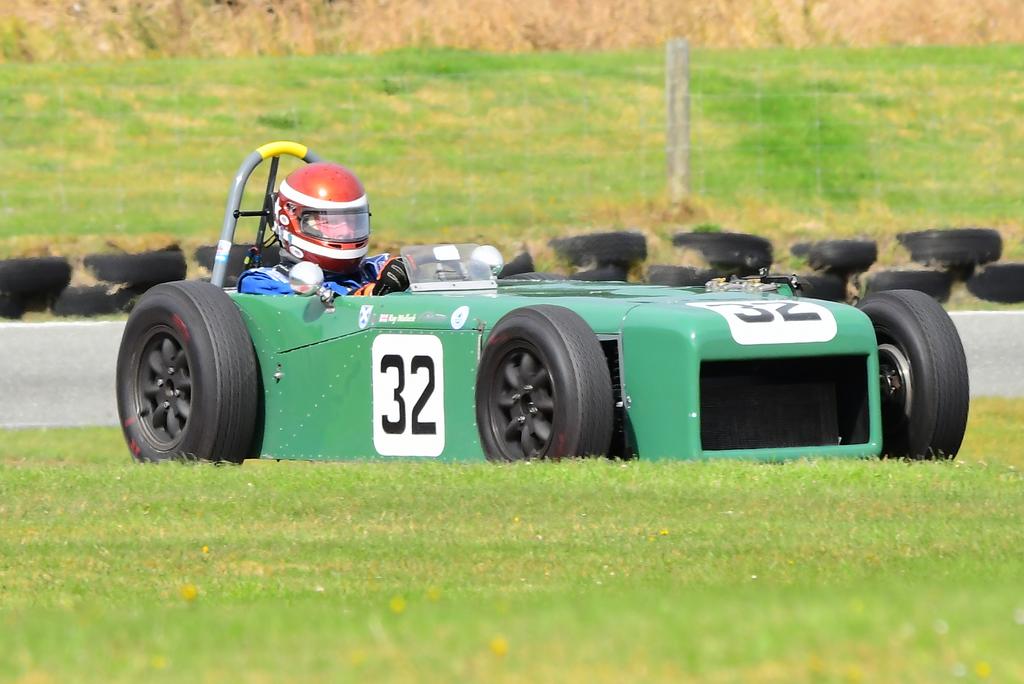
“I then built my first race car, a Mallock of course, and headed for my first test day at Silverstone in 1969. Then I thought, what if I am no good? What will I do next? However, it did click, I could feel the grip and control the slide – I was able to drive a race car, I was all set!
“I started racing in an MK9 Mallock in Formula Ford and then did Clubmans in 1970, winning the championship. I had an MK11 for the 1971 Championship, and we repeated the title win.”
“I moved into Formula 3 in a front-engined Mallock and got some very good results, and in 1972 I built a De Dion version, and it was the same again at the sharp end, racing against the likes of James Hunt and Alan Jones.”
“In 1973, with the assistance of Bill Stone, I had the offer of some sponsorship to do Formula Atlantic in a March, so I began winning in single seaters.”
“I then did quite a lot of Formula 2 between 1975 and 77, very much on a shoestring, but I got a second place in the International Trophy at Silverstone in an ICI-backed Chevron.”Unfortunately, that period coincided with Ray’s fiancée being killed in an accident.
“From 1979-81, I raced Ron Tauranac cars. We were very much on the same wavelength, both employing practical solutions to problems. I was a development driver for the first ground effect car, the RT2. We got on well and used to go skiing together.”
“In 1981, I won the Formula Atlantic Championship for the second time, and Bernie Ecclestone had promised the winner an F1 test drive through FOCA (Formula One Constructors Association). I rang Bernie, and he said there is testing at Paul Ricard, and I will get you in. I said I was racing in Australia, Macau and Malaysia, but would come back for Paul Ricard.
Bernie said, “No, concentrate on your Formula Atlantic, and you can test later. I will sort it out. When I got back, I rang him, and he said you have missed your chance, it obviously wasn’t a priority for you!”
“I then did British F1 in a Surtees TS20. It was a great car, and I took third at Oulton Park and Silverstone. We made suspension changes for Thruxton and noticed that the skirts on the Williams of John Macdonald’s RAM team were moving up and down, which was not allowed. We talked to the stewards, who said you will have to protest, which we did. I was 6’4”, which was a marginal height for the roll hoop, which RAM then protested. We welded a bit on the hoop, and we had to sign off on the certification.
“When I was in the assembly area, I gave John the V sign. He came over and said, “Don’t ever do that again, or I will break both your arms. That got my adrenaline up, and I was all over the back of the Williams. I was trying hard until I hit a marshall post, and the car burst into flames. I was unconscious inside.”
“This coincided with the start of Group C, and I knew that Aston Martin was involved with the Lola-based Nimrod programme. I knew the people very well, as I had done an apprenticeship there on leaving school. I was offered a drive in Lord Downes’ privately entered car and was also made responsible for its development. This was effectively the beginning of my business, RML Group.”
“We developed bodywork and suspension and got third in the World Championship in 1982 and again in the 1983 car. We then moved into Group C2, where I had nine World Championship wins between 1985 and 1987. We won the Group C2 World Championship in 1986 with David Leslie and Marc Duez. It was Austin Rover’s only ever World Championship win.”
“By 1989, Aston Martin had decided to make a full-blown works comeback at Le Mans, and as well as being on the driver line-up with David Leslie once again, I was also Engineering Director for the project. We had groundbreaking features, such as adjustable diffusers ahead of the front wheels, the carbon monocoque structure with fully integrated roll hoop, an innovative drivetrain with gear cluster ahead of the axle and the whole powertrain inclined by 4 degrees to maximise the diffuser potential.
“A lot of those things soon became commonplace. The car had fabulous roadholding and grip, but it was normally aspirated, which proved a bit of a handicap in certain conditions in Group C2. Essentially, we couldn’t turn up the boost for qualifying or during a wet/dry race, where in fuel-limited racing, the turbo cars would always have an advantage.”
“Nevertheless, we could have put a race-winning package together for 1990, but the Group C regulations changed overnight, and Aston Martin could not afford to change, so the programme was canned.”
“I then set my sights on the BTCC (British Touring Car Championship), which had just moved to FIA Supertouring regs and was attracting a great deal of manufacturer interest, and agreed a deal with Vauxhall to run two ex-works Vauxhalls before we created our own with David Leslie driving. That success led to us winning both the works Vauxhall BTCC contract and also the works Opel contract for development and customer car build & support worldwide. This allowed us to set up our premises in Wellingborough in Northamptonshire, stocked with all the gear we needed.
“We were the most dominant organisation in Super Touring in the BTCC, winning the championship with John Cleland and Vauxhall, and then with Nissan and Laurent Aiello to make RML the only team to win the title with two manufacturers. After BTCC, we moved on to WTCC (World Touring Car Championship), being responsible for Chevrolet’s works and customer programmes. With Chevrolet, we won the World Touring Car Championship in 2010, 2011 and 2012.”
In the midst of it all, in 1989, Ray recognised he couldn’t drive and run things anymore, so he retired from professional driving.
Hence, he was at Teretonga Park last weekend just “enjoying driving dad’s old car in a global series. It is great to be able to come to New Zealand where there is so much respect for my dad’s cars,” says Ray, who is about to turn seventy-five.
The Mallock is a light space-frame chassis with a modified Morris Minor rear axle, allowing customers to fit their own componentry. “Notable motor racing figures Patrick Head, Harvey Postlethwaite, and Max Mosley all worked with dad on cars and were regular visitors to our home.”
“It has been lovely meeting people here, and Teretonga is magical. I got in the flow with it towards the end of the weekend, and the car was magic. I was pulling 9000 revs into the loop, and I was quite pleased with my 1-minute 10.5-second lap time! Having come to New Zealand and raced the last three weekends, I have now raced on seventy-five different circuits around the world!”