NASCAR will usher in a major change to the way its championships are decided from 2026, officially ending the elimination-style Playoffs era and returning to a revised version of The Chase format across all three national series.
After more than a decade of knockout-style postseason racing, the sport has adopted a system that rewards consistency throughout the full season while still placing a strong emphasis on race wins.
Image: NASCAR/Getty Images
The new format will apply to the NASCAR Cup Series, the O’Reilly Auto Parts Series (formerly known as the Xfinity Series), and the Craftsman Truck Series, marking the biggest structural shift since the Playoffs were introduced in 2014.
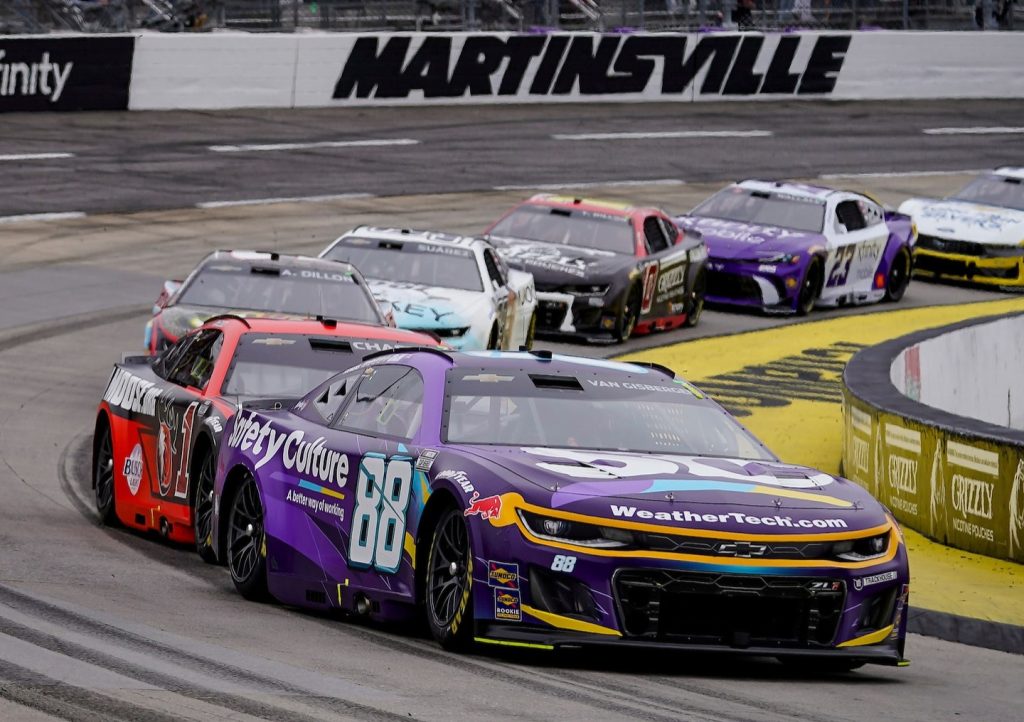
For Kiwi star Shane van Gisbergen, the changes represent a significant shift in how a championship campaign will be built. Under the current Playoffs system, van Gisbergen’s road-course victories would effectively guarantee a postseason berth under the “win-and-you’re-in” rule. From 2026 onwards, that safety net disappears.
Instead, SVG and every other driver will need to qualify for The Chase purely on points across the regular season — meaning road course success alone will no longer be enough to secure a championship shot.
NASCAR announced the move at the NASCAR Productions Facility, confirming the elimination-style Playoffs and winner-take-all finale will be scrapped in favour of a modernised version of The Chase — a format previously used between 2004 and 2013.
The revised Chase structure keeps a postseason but removes eliminations entirely. Rather than progressing through knockout rounds, drivers will contest the final portion of the season with a single points table, and the driver with the most points at season’s end will be crowned champion.
NASCAR president Steve O’Donnell said the decision was driven by a desire to reconnect with the sport’s long-time fanbase while ensuring every race still matters.
“The biggest thing was looking at who we wanted to be as a sport going forward, and that included really a focus on our core fan base and who had been with us for a long, long time and gotten the sport to where it was. So we wanted our future format to reflect that,” O’Donnell said.
“A lot of things you’re going to see and how we talked to the fans, from an overall NASCAR standpoint, was going to really embrace that hardcore fan, and so we felt like the format needed to absolutely reflect that.”
How the new Chase format works
From 2026, the top 16 drivers in the NASCAR Cup Series will advance to The Chase based solely on regular-season points. The top 12 will qualify in the O’Reilly Auto Parts Series and the top 10 in the Craftsman Truck Series.
Crucially, the long-standing “win-and-you’re-in” rule is gone.
That means race wins — including marquee road course victories — will no longer automatically lock drivers into the postseason. Every driver must earn their place through consistency across the 26-race regular season.
Once The Chase begins, points are reseeded one time, based on regular-season finishing positions. The regular-season champion receives a 25-point advantage over the second seed, and points then descend in five-point increments.
For the Cup Series, the Chase runs across the final 10 races of the season. The O’Reilly Auto Parts Series will contest a nine-race Chase, while the Truck Series will run seven postseason races. There are no eliminations.
The champion is simply the driver who has accumulated the most points after the final race of the season.
While automatic playoff berths are gone, NASCAR has increased the reward for winning races.
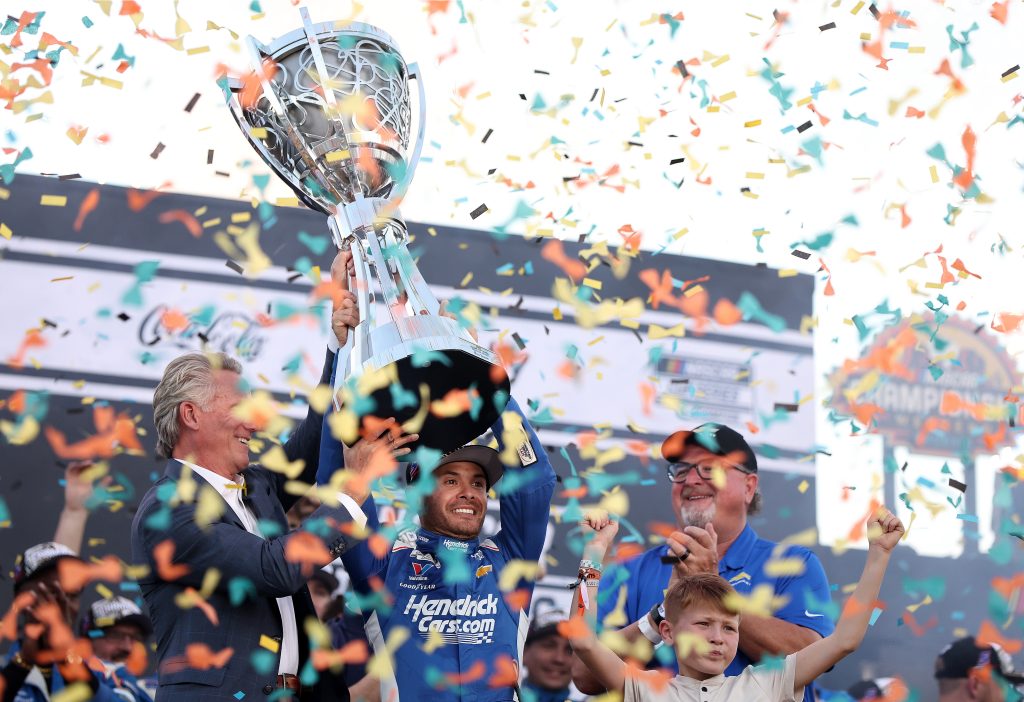
Kyle Larson celebrating his championship title last year. Image: Meg Oliphant/Getty Images
From 2026, race winners will score 55 points — up from 40 — making victories more valuable than ever in the championship picture. Stage points and finishing position points remain unchanged, but playoff bonus points are removed entirely.
O’Donnell said the new structure was designed to strike a balance between rewarding consistency and keeping winning at the heart of NASCAR competition.
“As discussions continued to flow about what we wanted to do, the core elements were that we wanted it to be something the fans would embrace, we wanted it to reward consistency throughout all of the 36 races, but it was also really important for winning to matter. We didn’t want that to go away,” O’Donnell said.
“So how do you marry all of those together, and where we landed, we think, is the best of both worlds, that it has that element of every race matters, all 36 races matter, but you’re also able to include The Chase and our form of a playoff, so to speak.”
He added that the elimination system had, at times, distorted racing behaviour and placed too much emphasis on isolated victories.
“I think when you looked at the ‘win-and-you’re-in,’ it would be hard to argue that it didn’t change the way the drivers raced,” O’Donnell said.
“One of the things with win-and-in that we didn’t think about that ultimately happened was we wanted every race to matter, and that didn’t happen with win-and-in, right? You saw someone who could win that first playoff race and then kind of say, ‘OK, I’ll see you in a couple weeks,’ and that’s not something we want to deliver for the fans.”
What it means for Shane van Gisbergen
For Shane van Gisbergen, the new format fundamentally changes the strategy required to contend for a NASCAR championship.
Under the current Playoffs system, SVG’s road course strength gives him a powerful weapon — a single victory can secure a postseason berth regardless of oval form or points position.
From 2026, that safety net disappears.
Van Gisbergen will now need to build a full-season campaign based on consistent results across ovals, superspeedways and road courses alike. While his road racing excellence will still deliver valuable 55-point wins, those victories alone will no longer guarantee a Chase position.
Instead, the Kiwi star will need to remain firmly inside the top 16 in points after 26 races — making adaptability, race management and weekly execution more important than ever.
For a driver still mastering NASCAR’s oval disciplines, the new format raises the bar and places greater emphasis on development, strategy and long-term performance.
The move comes after a year-long review process involving owners, drivers, manufacturers, tracks, broadcast partners and fans. The aim was to simplify the championship while increasing its credibility and ensuring the best-performing driver across the season is crowned champion.
O’Donnell said clarity was a major priority.
“Not only to newer fans but even the fans who follow the sport, I think, had a difficulty at times,” O’Donnell said.
“One of the core elements that was part of the committee that Tim led was, can you explain this if you got on an elevator and you had 20 floors to explain it to somebody, how does it work? And we wanted to make sure we could do that, and we feel like we’re able to do that with one point system.”
The Chase will officially return when the postseason begins in September 2026, with the Cup Series and O’Reilly Auto Parts Series opening their campaigns on Labour Day weekend at Darlington Raceway. The Truck Series Chase will begin two weeks later at Bristol Motor Speedway.
While NASCAR believes the new format blends tradition with modern competition, for drivers like Shane van Gisbergen, it signals the start of a new championship reality — one where wins still matter, but season-long consistency will determine who races for the biggest prize.