




New Zealand motorsport veteran Reg Cook and his team are preparing to take Kiwi ingenuity to extraordinary new heights as they target speeds approaching 800km/h in an audacious land-speed record attempt on Bolivia’s vast salt flats.
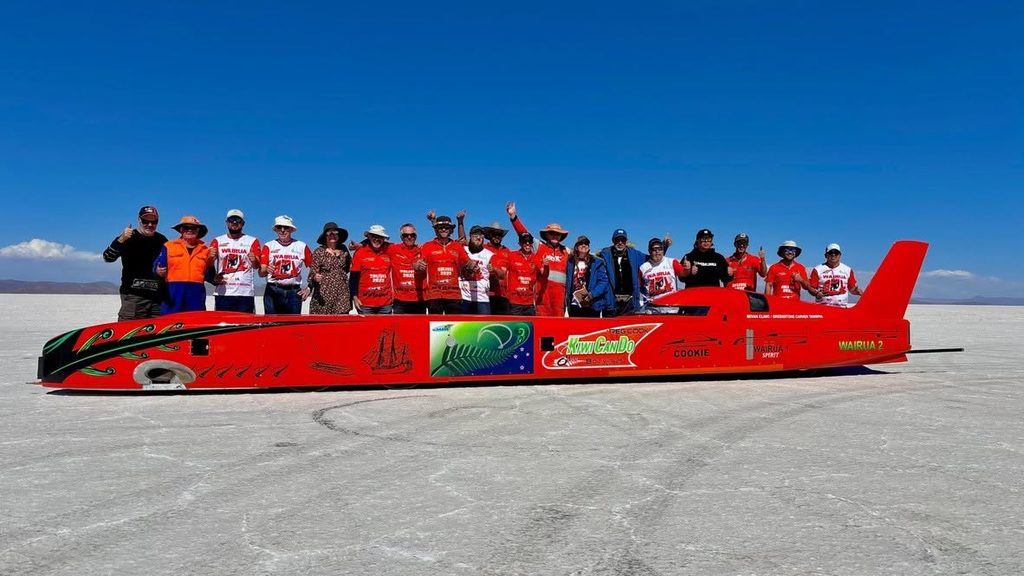
At 79, Cook has no intention of slowing down, with the highly experienced racer preparing to climb behind the wheel of Cook Motor Racing’s purpose-built Wairua 2 streamliner on the enormous Salar de Uyuni salt flats.
The goal is to challenge an FIA land-speed benchmark of around 758km/h, or 471mph, with Cook and his New Zealand-based team developing Wairua 2 with even greater speeds in mind.
It is an enormous undertaking that will test not only Cook behind the wheel but also the Kiwi engineering and ingenuity that went into creating a machine capable of travelling at speeds rarely associated with piston-engined, wheel-driven cars. Cook’s pursuit of land-speed records is nothing new.
The New Zealander has spent years competing at the famous Bonneville Salt Flats in the United States, setting multiple records along the way, while the original Wairua streamliner surpassed 500km/h.
In 2018, Wairua recorded a speed of approximately 328mph, or 528km/h, powered by a Judd V10 engine.
Wairua 2 represents a significant step forward, with Cook Motor Racing turning its attention to Bolivia as the team pushes into an entirely different realm of speed. The Salar de Uyuni provides one crucial ingredient that has become increasingly difficult to find at Bonneville — space.
Wairua 2 requires several kilometres simply to accelerate towards its maximum speed before completing the official timed section, while another substantial stretch is needed to safely bring the car to a stop.
The sheer size of the Bolivian salt flats gives Cook and his team the opportunity to stretch the legs of a car developed with speeds beyond 800km/h in mind.
Sitting approximately 3,650 metres above sea level, the location also presents a unique combination of opportunities and challenges, with the thinner air reducing aerodynamic drag while placing additional demands on the engineering package. Simply building a car capable of producing enough power is only one piece of the puzzle.
One of the team’s biggest challenges has been ensuring components can withstand the extraordinary forces generated at those speeds, with tyres in particular becoming a major focus.
Cook Motor Racing has developed specialised equipment to test its tyres at speeds beyond those expected during a record attempt, ensuring they can survive the immense rotational forces involved before Wairua 2 is unleashed on the salt.
Previous testing has demonstrated just how fine the margins are, with a tyre failure occurring during testing at more than 850km/h and forcing the team to reassess its tyre and testing programme.
It is the kind of challenge that has required the Cook Motor Racing crew to continually innovate rather than rely on an off-the-shelf solution. Bolivia itself is not unfamiliar territory for Cook.
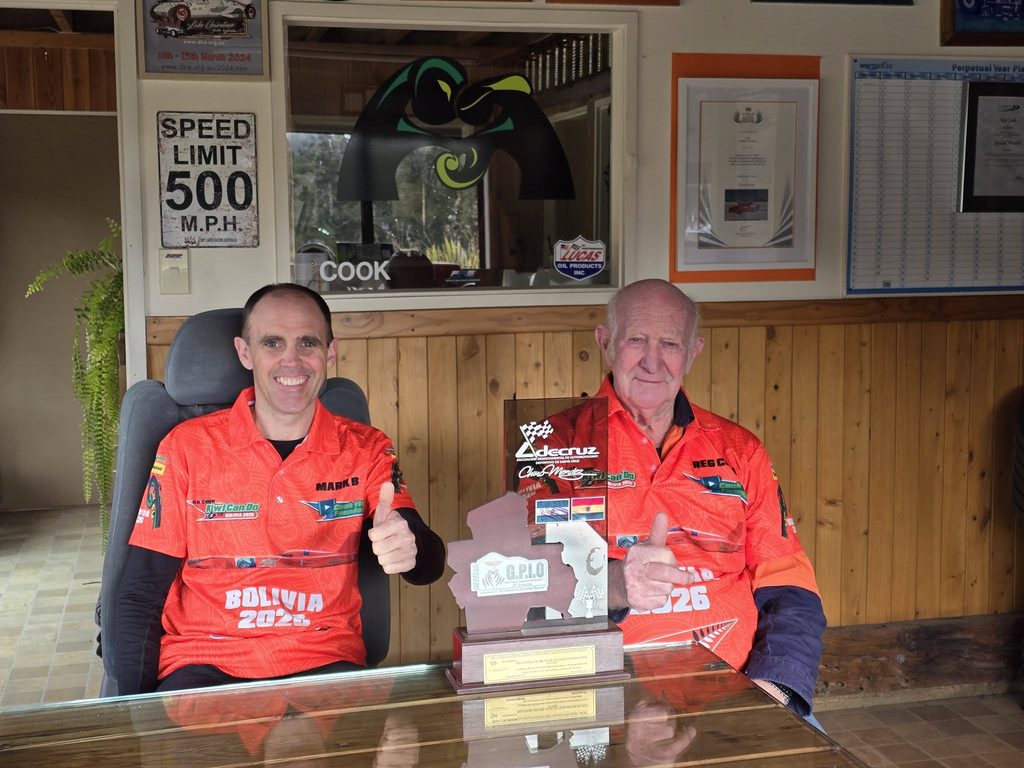
He travelled to Salar de Uyuni in 2025 with a Nissan coupe and came away with three records, including a run of approximately 297.9km/h.
The experience gave the team valuable knowledge of the location and the considerable logistical exercise required to transport a New Zealand motorsport operation to one of the world’s largest salt flats.
This time, however, the scale of the challenge is considerably greater.
Beyond the numbers, Cook’s latest pursuit is also intended to showcase what a group of New Zealand engineers, fabricators and motorsport enthusiasts can achieve.
The project has embraced the traditional Kiwi “can-do” mentality throughout its development, with Wairua 2 representing years of work from a team determined to solve problems that emerge when conventional motorsport speeds are left far behind.
Cook has enjoyed a motorsport career spanning decades, from circuit racing in New Zealand to becoming one of the country’s most accomplished land-speed competitors.
Now, rather than settling for the records already beside his name, he and his team are preparing for their most ambitious challenge yet.
If everything comes together on the vast Bolivian salt, Cook could soon find himself travelling faster on four wheels than any New Zealander before him — with a Kiwi-built machine and a Kiwi team behind the attempt.
Header Image: CMR Bolivia