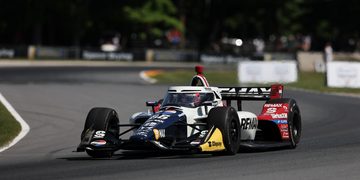




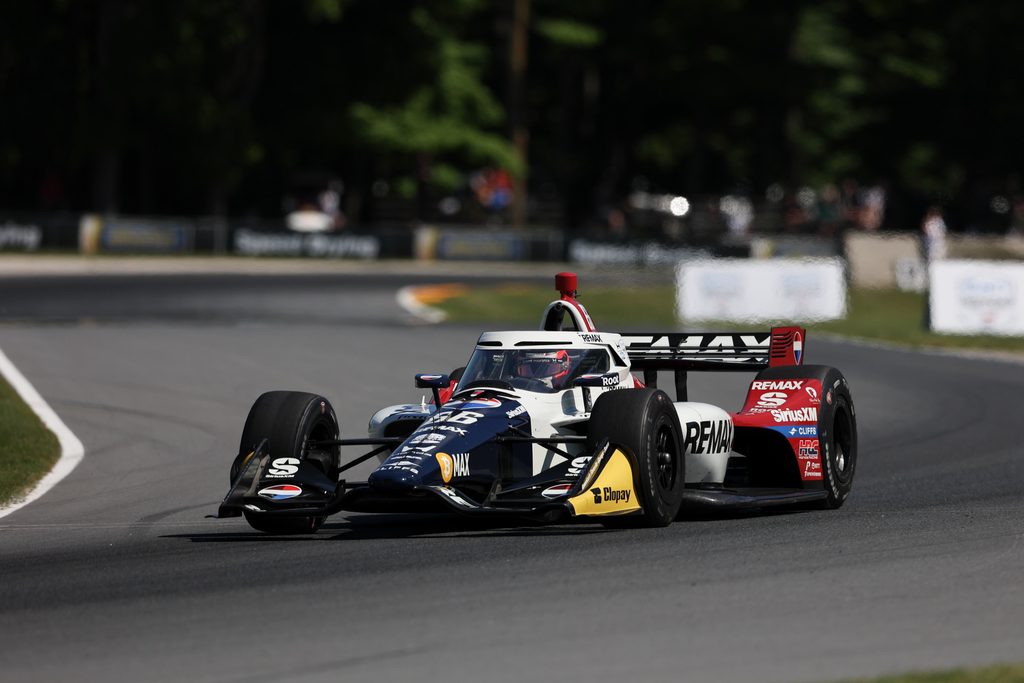
Marcus Armstrong came agonisingly close to securing his maiden NTT IndyCar Series victory before a devastating late mechanical failure robbed the Kiwi of a breakthrough win at Road America.
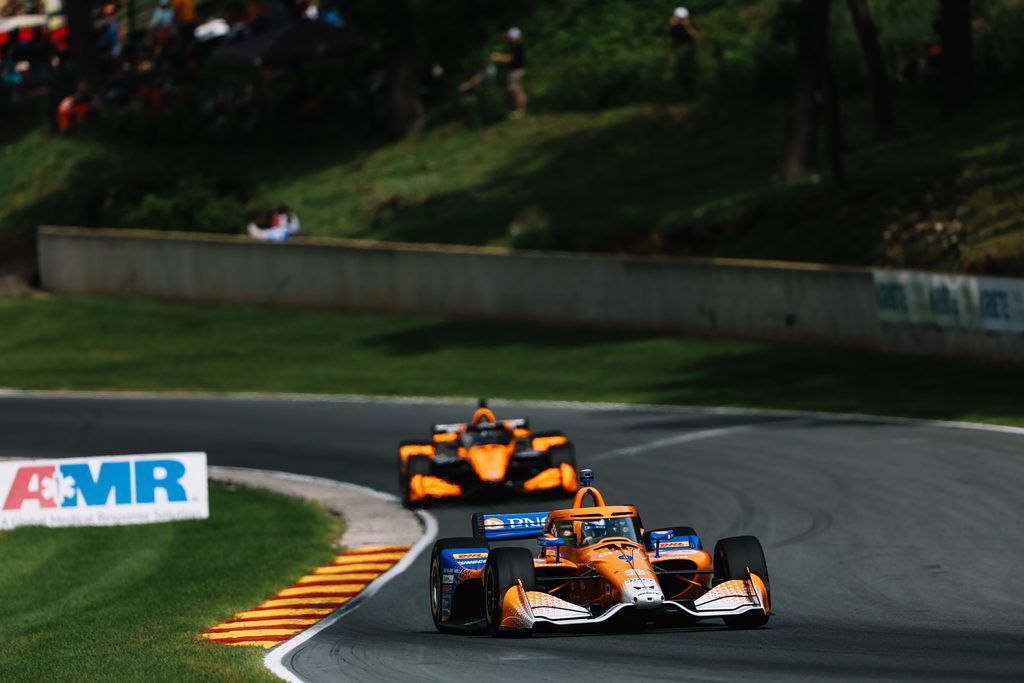
It was a day of mixed fortunes for New Zealand’s IndyCar contingent, with Scott McLaughlin recovering to finish seventh and Scott Dixon salvaging 12th after a frustrating sequence of events derailed his race strategy.
The weekend had started brightly for Armstrong, who immediately established himself as a contender by topping the opening practice session for Meyer Shank Racing. His benchmark lap of 1:44.271s put him ahead of teammate Felix Rosenqvist, while Dixon ended the session seventh and McLaughlin 19th.
Armstrong backed up that performance in Practice 2, finishing second fastest behind Pato O’Ward. McLaughlin also showed strong pace in third, while Dixon ended the session 17th.
Qualifying continued Armstrong’s impressive form. The Kiwi secured a second-row starting position in third with a lap of 1:44.022s, just over three tenths shy of pole-sitter Alex Palou.
McLaughlin also advanced to the Fast Six and qualified sixth, while Dixon faced a tougher challenge from 12th on the grid.
When the green flag dropped for the 55-lap contest, Armstrong wasted little time asserting himself. The Meyer Shank Racing driver launched aggressively into Turn One and quickly moved into second after forcing David Malukas into a defensive battle that saw the American lose momentum.
McLaughlin also enjoyed a strong opening lap, gaining a position to move into fifth, while Dixon advanced from 12th to 10th.
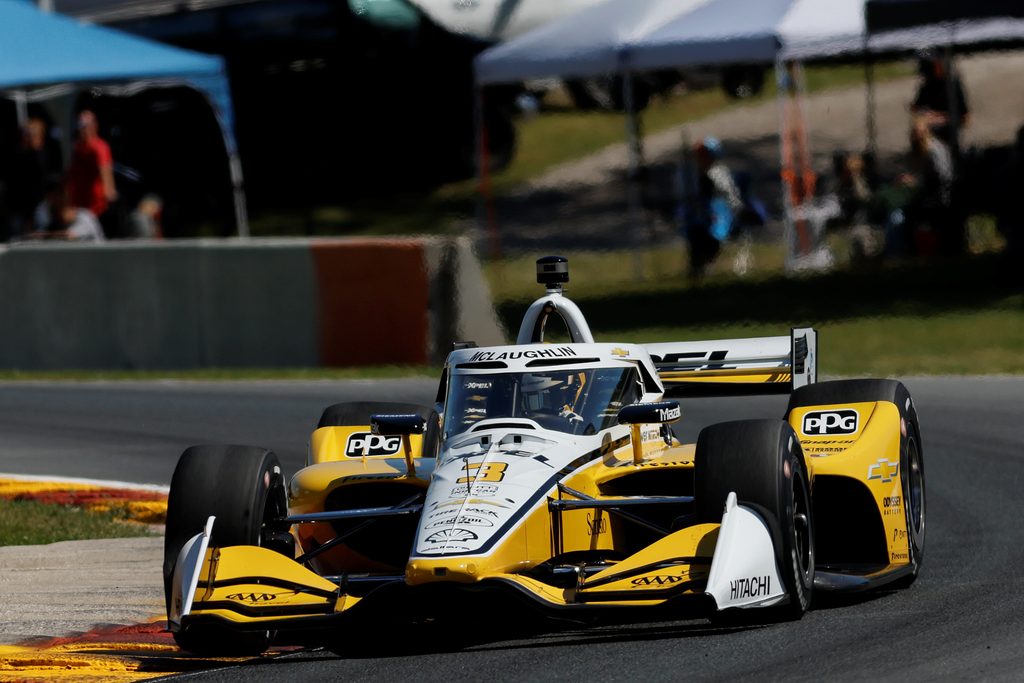
As the opening stint unfolded, Palou established control at the front, stretching his advantage to more than three seconds over Armstrong by Lap 7. Behind the Spaniard, Armstrong maintained a comfortable gap over Malukas while McLaughlin found himself slipping backwards after being overtaken by Marcus Ericsson.
The first round of pit stops arrived on Lap 14 for the leading contenders, but the complexion of the race changed dramatically moments later.
A loose wheel on Romain Grosjean’s car brought out the opening caution period, creating immediate problems for Dixon. The six-time IndyCar champion narrowly missed the opportunity to pit before pit lane closed and was forced to continue around the circuit without service.
The badly-timed caution proved costly, dropping Dixon down the order, and matters worsened when he was subsequently handed a drive-through penalty after pitting once the field had reordered under yellow.
When racing resumed on Lap 20, Armstrong remained firmly in contention near the front while Dixon found himself buried back in 24th place.
The race then took another dramatic turn during the second pit cycle.
Palou, who had remained glued to Rosenqvist’s rear wing while running second, entered pit lane on Lap 29 but was hit with a speeding penalty. The championship leader served a drive-through penalty just before another full-course caution was triggered when Christian Rasmussen stopped on track. The timing of the yellow flag proved crucial.
Armstrong had completed his stop only moments before the caution was called, vaulting himself into a commanding position once the rest of the field cycled through their pit stops. When the order stabilised, Armstrong inherited the race lead ahead of Malukas and a charging pack led by Alexander Rossi and Will Power.
The Kiwi confidently controlled the restart on Lap 33 and again on Lap 36 following another caution for debris.
With victory now firmly within reach, Armstrong executed his final pit stop with 13 laps remaining before cycling back into a net race lead as the final round of stops played out.
As the closing laps approached, the 25-year-old appeared destined to finally break through for his first IndyCar triumph.
Christian Lundgaard emerged as Armstrong’s closest challenger, but the Kiwi held a comfortable 3.7-second advantage with seven laps remaining and possessed significantly more push-to-pass available for the run to the finish.
Even as Lundgaard began to chip away at the margin, Armstrong still maintained a healthy 2.4-second buffer with just four laps left. Then disaster struck.
After controlling much of the race and looking set for a career-defining victory, Armstrong’s car suddenly developed a major mechanical issue. The engine let go with only three laps remaining, ending his race instantly and bringing out a full-course caution.
The heartbreaking retirement left Armstrong stranded at the side of the circuit while a golden opportunity slipped away.
For a driver who has repeatedly shown race-winning pace since arriving in IndyCar, it was another cruel chapter in his pursuit of a first series victory. The caution set up a frantic final-lap restart.
Lundgaard led the field back to green ahead of Malukas and Graham Rahal, while McLaughlin had fought his way back into the top ten and sat eighth.
Chaos erupted behind the leaders when Nolan Siegel spun at Turn Five, somehow avoiding contact with the rest of the field. Moments later, a battle for third ended dramatically when Will Power made contact with Rahal, sending the American into the wall and triggering another caution.
At the front, however, Lundgaard held on to claim victory in the 2026 Grand Prix of Road America.
McLaughlin’s determined recovery drive earned him seventh at the chequered flag after spending much of the afternoon fighting through traffic and overcoming poorly timed cautions.
Dixon also mounted a respectable comeback after his earlier misfortune, climbing from 24th to finish 12th despite the costly pit lane sequence and drive-through penalty. Yet the story of the day belonged to Armstrong.
After leading the race, surviving multiple cautions and appearing destined for a maiden IndyCar victory, the Kiwi was left with nothing to show for one of the strongest performances of his IndyCar career. He was asked if he had any indication that something was wrong with the engine prior to the complete failure.
“No. I mean, it was all smooth sailing. I came out at turn six, and the engine just started spluttering like it was out of fuel, but clearly it wasn’t. And then it just completely died. So I don’t know. We have to speak to Honda and see what the issue was. But there was no indication that there was something wrong.”
“I’m massively proud of the guys and girls on the 66 because we had the quickest car out there today. I think we had the quickest car really this weekend. Obviously, Alex was quick too. But, yeah, I mean, my engineers did everything right, my pit crew as well. Like every pit stop was spot on, and I thought that was ours to lose.
I had some time in the pocket already. So for Lundgaard, obviously, he was coming. But, yeah, just gutted really,” he added
It was a cruel reminder of how unforgiving motorsport can be, and a race that will undoubtedly be remembered as one that got away.
The NTT IndyCar Series returns on July 5-6 for the Honda Indy 200 at Mid-Ohio.
Header Image: Travis Hinkle | IMS Photo